 About OpenAI API
Meta's open-weight AI model now runs on Apple Macs
Muse Spark Open runs locally on Apple silicon; Cloudflare open-sources Void for Vite full‑stack; Google, Amazon and OpenAI publish tools that shift where and how teams build and sell.
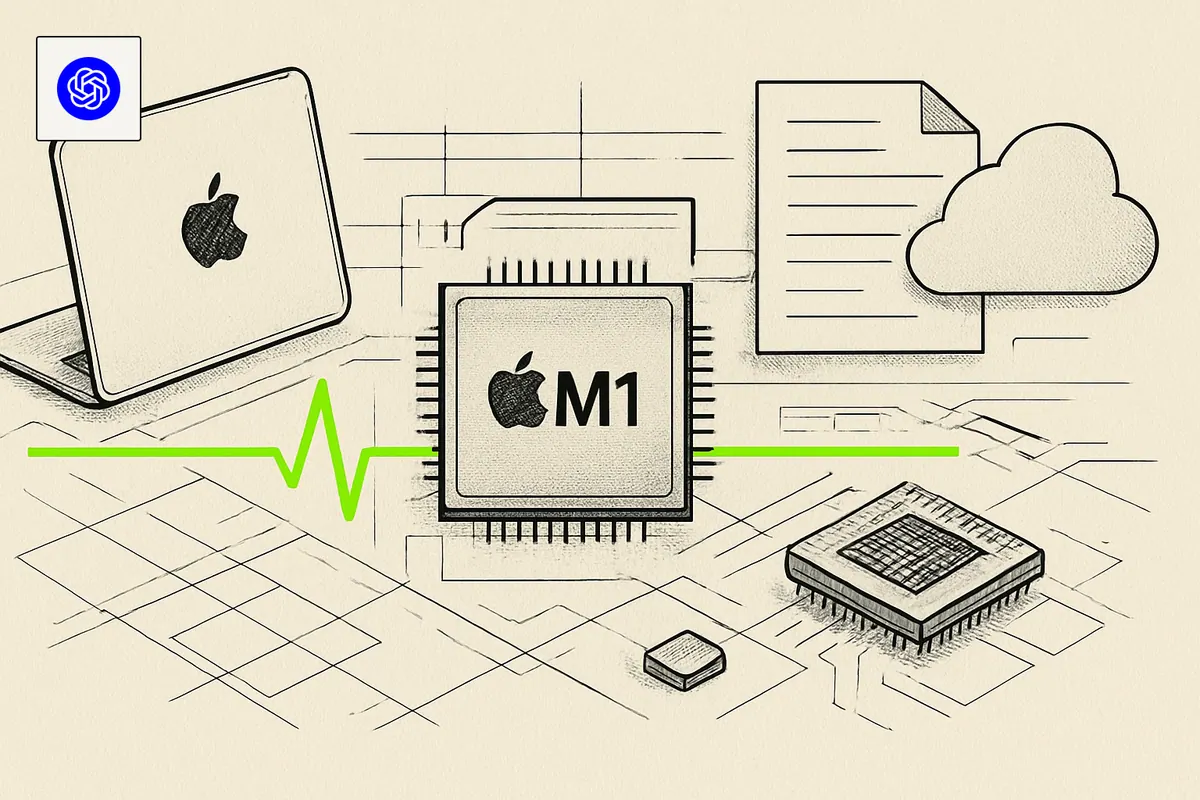
AI generated — machine-made illustration, not a photograph of the event.
Running models on Macs and a Vite-first deployment path both reduce cloud costs and shorten iteration cycles; shopping and personal AI hardware shift customer touchpoints and data obligations.
Meta launches Muse Spark Open for Apple silicon
Meta released an open-weight model, Muse Spark Open, that can run locally on Apple silicon. The announcement emphasises local execution on Macs rather than cloud-only hosting. Why it matters: Teams that use Mac hardware can prototype model-driven features without sending data to a third-party service, which can lower cloud inference spend and change data-risk assessments.
Cloudflare open-sources Void to tie Vite apps to deployment
Cloudflare and VoidZero published three open-source pieces — the Void Platform, Void SDK and Void CLI — packaged as a single JavaScript package and Vite plugin you can install via npm install void. The tools promise to connect server routing, typed data access and provisioning to a Vite workflow and to deploy to Cloudflare. Why it matters: Front-end teams using Vite can build server and client together and push a prototype to Cloudflare more quickly, shortening the time from proof-of-concept to live service.
Google rolls out Universal Cart in the US
Google launched Universal Cart for users in the United States, making the tool available across Google Search and the Gemini app. The product aggregates shopping selections to a single cart experience across those interfaces. Why it matters: E‑commerce teams and agencies will need to track visibility in Google’s new cart flow and measure whether it raises conversion or shifts traffic from merchant carts to Google-managed checkout paths.
Amazon’s Bee ships two personal AI devices starting at $74.99
Amazon-owned Bee introduced two personal AI devices: an updated wearable and a credit-card-sized recorder that attaches to smartphones. Both devices offer conversation summaries, to‑do list generation and integrations with Alexa and Amazon shopping, with prices starting at $74.99. Why it matters: Customer-facing teams must consider new conversational touchpoints and potential integration options with Alexa and Amazon shopping, and review privacy and data-retention policies tied to recorded conversations.
OpenAI offers GPT‑Rosalind to academic labs
OpenAI announced the Rosalind Academic Plan to give eligible academic laboratories sponsored access to GPT‑Rosalind and related tools for life‑sciences research. The plan targets academic research groups rather than commercial users. Why it matters: University labs and research groups can access a specialised model and toolset for life-sciences projects without the usual commercial licensing route, which may speed reproducible research and reduce upfront costs for academic teams.
Porsche previews the Mission S mid-engined production car
Porsche revealed the Mission S concept, a mid-engined sports car positioned above the 911 that the company intends as a regular production model. The preview was presented alongside Porsche’s Sportwagenschmiede '35 strategy to prioritise higher-margin, more individualised cars as it aims to return to double-digit margins by 2035 after profit margins fell from 18% to 1% in recent years. Why it matters: Automotive teams and suppliers tracking market segmentation should expect Porsche to push higher-margin customisation and pricing, which could raise demand for specialised manufacturing, parts and bespoke services.
What we don't know
- For Muse Spark Open: exact model sizes, licensing terms and availability to enterprises or developers.
- For Void: enterprise SLAs, supported databases and pricing for the Void Platform hosting.
- For Universal Cart: which merchants and payment flows are included and whether there are integration fees.
- For Bee devices: data‑storage policies, subscription requirements and platform compatibility details.
- For the Rosalind Academic Plan: precise eligibility criteria, capacity limits and any cost obligations for labs.
- For Mission S: final production timeline, pricing and technical details such as the powertrain.
What to do next
- If you run model-driven features on Mac hardware, plan a one-week test to compare local inference (when Muse Spark Open is available) against your current cloud costs and privacy requirements.
- For web teams using Vite, install the package with npm install void and build a tiny end-to-end prototype to evaluate the Void SDK, CLI and Cloudflare deployment workflow before changing production pipelines.
- Retail, product and privacy leads should review Google’s Universal Cart and Amazon Bee documentation once available, and log questions about merchant fees, data handling and integration work into your vendor decision list.
- TechCrunch AI — original reporting
- OpenAI News — original reporting
- Ars Technica — original reporting
- TechCrunch AI — original reporting
- Cloudflare Blog — original reporting
- TechCrunch AI — original reporting
Links above go to the original publisher. Signalcraft states the consequence; it does not reproduce their text.
0 comments
No comments yet. If you have run any of this, that is the most useful thing you could add.