Trump’s 100% US-made tech push raises costs and supply risk for small teams
The Consumer Technology Association says the plan isn’t realistic and has run numbers on business and consumer costs; the published report does not include firm price figures.
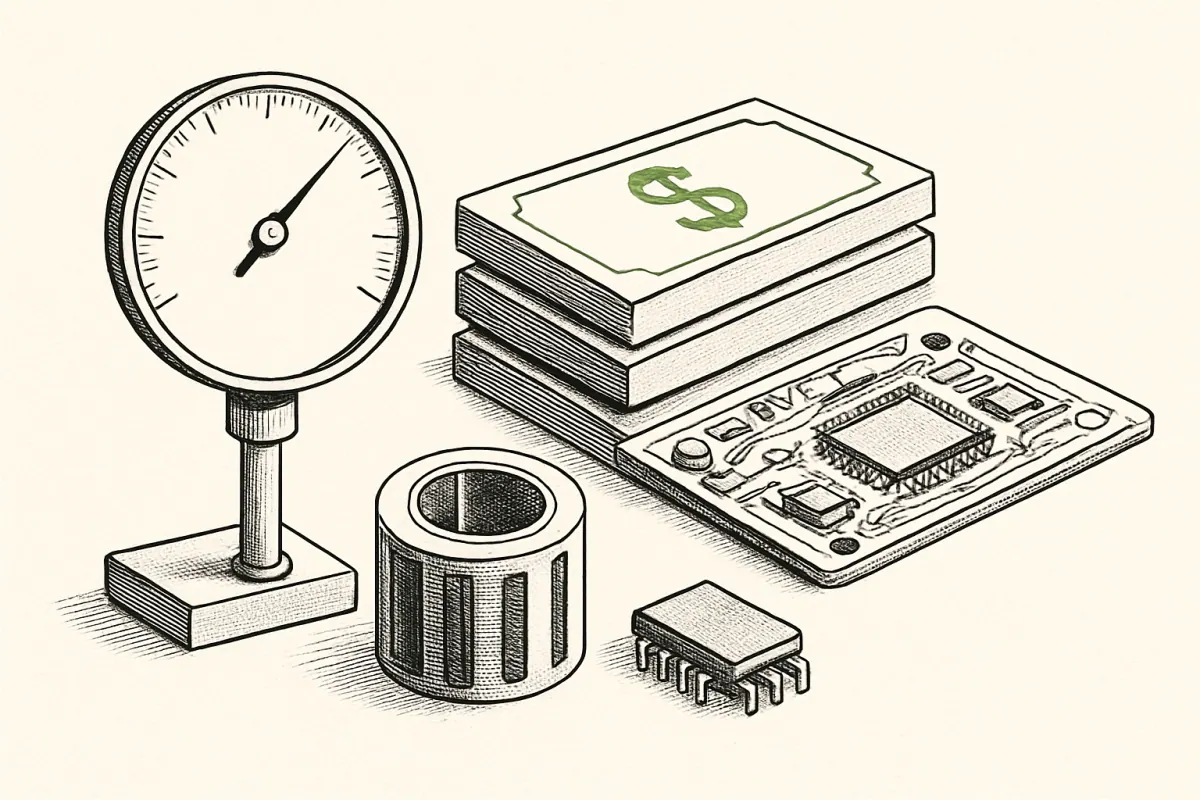
AI generated — machine-made illustration, not a photograph of the event.
Small teams will face higher procurement cost pressure and added supply-chain risk if federal policy forces 100% US-made components for AI, chips, biotech or robotics.
What actually changed
The White House used an executive order in December 2025 to launch a programme called the "Genesis Mission" that aims to force key technologies to be completely manufactured in the United States. The goal applies across areas the administration flags as strategic: artificial intelligence, advanced robotics, biotechnology, semiconductors and nuclear technologies.
The Consumer Technology Association — the industry trade group — has pushed back and produced an analysis aiming to quantify the impact on businesses and consumers. The CTA’s work reframes the policy from an abstract goal into something with direct cost and sourcing consequences for suppliers and buyers.
Who it affects
Small manufacturers, hardware-dependent service providers, agencies that buy specialised tech, and software teams that rely on third‑party hardware will be exposed. The policy targets entire supply chains, not only final assembly: the administration’s text excludes relying on neighbouring countries or allies for any single component, which expands vendor risk for procurement teams.
If your product or service uses off‑the‑shelf chips, sensors, lab reagents or embedded systems built overseas, your sourcing options and contract relationships are the ones that change first. The CTA framed its analysis as an estimate of how businesses and consumers would bear the cost of putting those supply chains entirely onshore.
What it costs or what it replaces
The CTA has attempted to estimate the economic cost to businesses and consumers of implementing the 100% domestic requirement, but the published coverage does not include the CTA’s numeric estimates. The announcement does not state pricing or specific subsidy and tariff levels that would accompany the plan.
What the policy would replace is the current global supply‑chain model: reliance on overseas suppliers, contracts that span multiple jurisdictions, and regional manufacturing hubs that handle components or subassemblies. Replacing those arrangements would change supplier qualification, lead times and contract risk.
The CTA’s critique — that the goal is not grounded in reality — implies significant compliance and procurement friction. For a small team that means more time spent on supplier audits, longer lead times, and higher sourcing costs, though the article does not publish a concrete cost per item or sector.
What we don't know
- The CTA’s numeric cost estimates and the underlying assumptions (the article notes the CTA ran numbers but does not publish them).
- Whether the federal plan will include direct subsidies, tariffs, procurement set‑asides or other mechanisms to offset higher domestic costs.
- Implementation timeline and which product categories would be enforced first.
- How enforcement will treat multi‑country supply chains and components that currently have no US-made equivalent.
- The CTA’s sector-by-sector breakdown (if any) for semiconductors, biotech, AI hardware and robotics.
What to do next
- Map exposure: list the overseas suppliers, critical components and contract clauses that would be affected if your procurement had to be fully US‑made. Identify single points of failure.
- Cost-scenario modelling: run a simple cost model that adds plausible increases to lead time and unit cost (use conservative multipliers) so you can price services or decide where to absorb margin pressure. Update procurement terms to include material-sourcing change clauses.
- Monitor the CTA analysis and federal rulemaking for published numbers and implementation details; delay any irreversible shift to US‑only sourcing until you see the specific cost figures and enforcement rules.
- Ars Technica — original reporting
Links above go to the original publisher. Signalcraft states the consequence; it does not reproduce their text.
0 comments
No comments yet. If you have run any of this, that is the most useful thing you could add.