Fact-checking what AI tells you
Check a claim with sources and know when a polished answer has not earned your trust.
14 min readPlus one task, about 10 min
The one idea
A citation is not evidence until you open it. AI assistants can produce a convincing sentence, attach a plausible-looking source and still be wrong. The safer pattern is to make the search visible, inspect the source yourself and ask the assistant to stay inside the material you supplied.
There are two useful ways to do this. Perplexity is a search-first assistant: it searches the web before composing an answer and places citations beside claims. ChatGPT and Gemini also have a web-search mode, usually shown as a Search or web toggle. That mode adds a search step to an ordinary chat. In both cases the search helps you find material; it does not transfer responsibility for judging the material to the tool.
Your job today is not to become a professional researcher. It is to learn the hand-off. Let the tool discover candidate sources, open the important ones, and then ask for a comparison using only those sources. That is a very different task from “tell me the answer”.
Why it matters
A fabricated source is worse than no source because it looks like evidence. A reader who sees a journal title, a year and a link may reasonably assume someone checked it. The assistant may have assembled those details from patterns in its training rather than from a page it has just read.
Search-first tools reduce one failure mode: they have a chance to retrieve a real page instead of relying only on memory. They do not solve source quality. A search result can be out of date, commercial, copied from another site or answering a slightly different question. A citation can point to a real page that does not support the sentence beside it. You still open the link and read the relevant passage.
This distinction is useful well beyond AI. If you are deciding whether a supplier meets a standard, whether a statistic is current or whether a policy changed, the source itself matters. The assistant can save you time by finding and comparing documents. It should not quietly become the document.
The tools you will use
From a question to a checked claim
- Write the question narrowly. Include a place, date, population or definition when it matters. “How much does solar cost?” is not checkable. “What was the average installed residential solar cost in the UK in 2024?” is at least pointed at a real measure.
- Ask a search-first tool for candidate sources, not for a final decision. Tell it to show the source for each important claim and to say when it cannot find a reliable answer. The wording encourages a trail, but it does not make the trail reliable by itself.
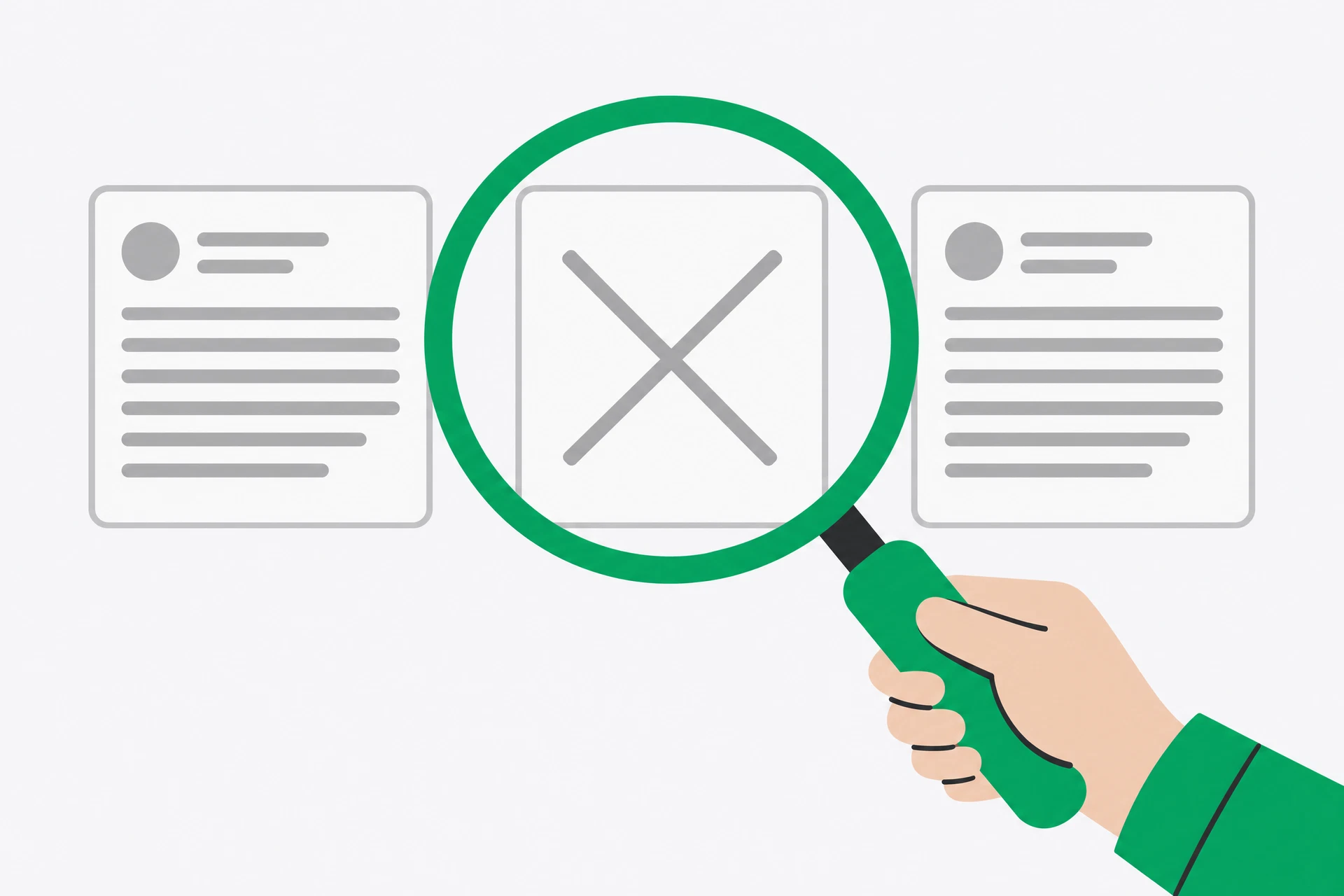
- Open the citations. Check the page title, publisher, date and the sentence or table that supports the claim. If a source is a search result, an unsourced blog or a page about a different country or year, mark it as unsuitable rather than letting its professional appearance persuade you.
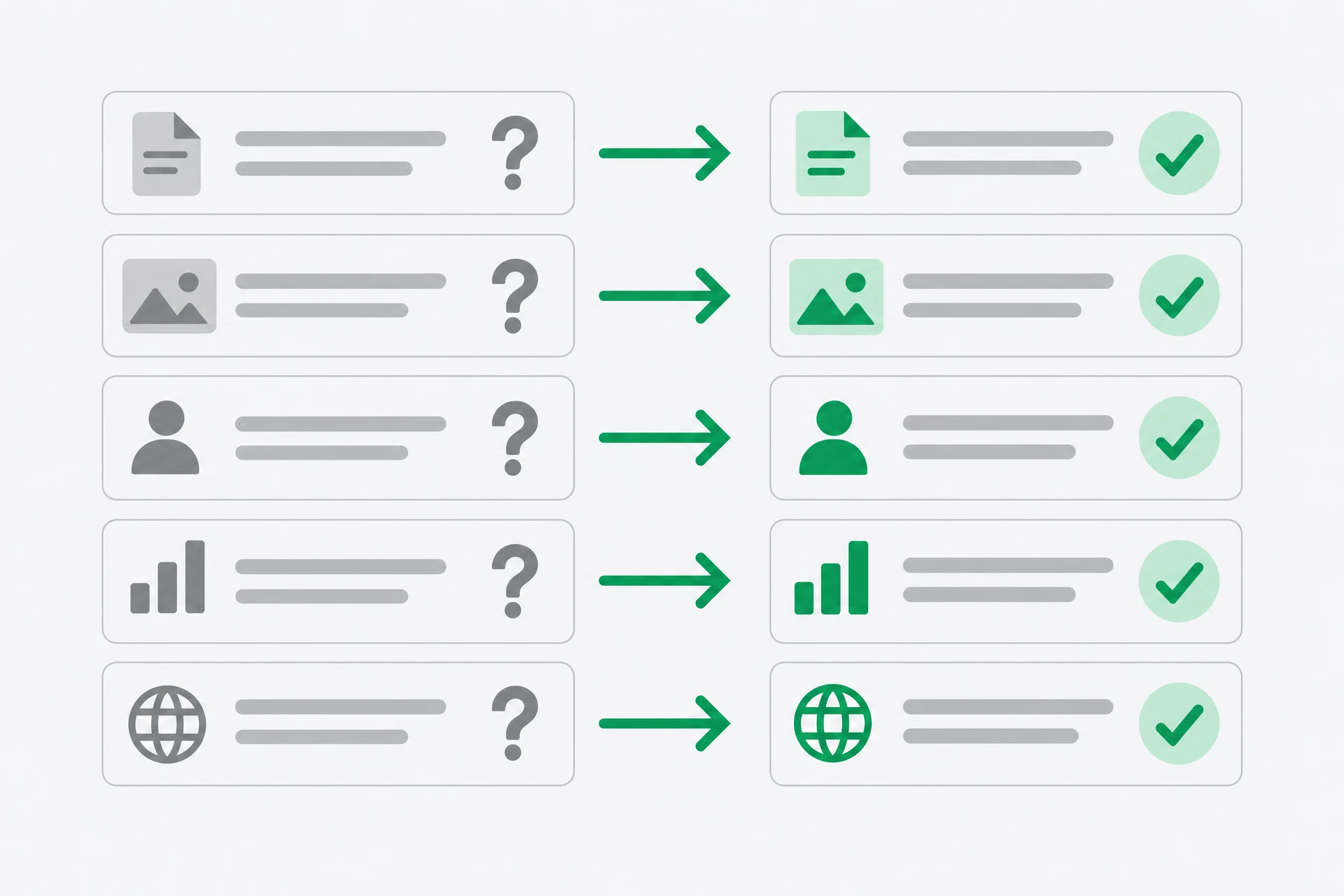
- Give the assistant only the sources you kept. Ask it to compare what they say and to mark disagreements or gaps. This changes the job from retrieving facts from memory to reading a small bundle of documents.
Here are the sources I checked:
[PASTE 2–5 URLs]

For each source, summarise only what it says about [question].
Separate reported facts from interpretation.
Tell me where the sources disagree or leave the question unanswered.
Do not add information from other sources.
- Trace one important claim back to its original page or dataset if possible. Several articles may repeat one press release. Six links are not six independent pieces of evidence when they all copy the same number.
- Write the conclusion in your own words and include a confidence boundary: what the sources establish, what they suggest and what they do not tell you. That sentence is more valuable than a confident percentage invented by the assistant.
 AI-generated illustration
See it
Imagine asking, “What is the current average waiting time for a first specialist appointment in my region?” A normal assistant may give you a number that sounds sensible. It may be an old national average, a number for a different kind of appointment or a number that never existed. The fluency hides the mismatch.
A search-first request is more disciplined: “Find the latest official figure for first specialist appointment waiting time in [region]. Give the publication date, the measure used and the exact link. If the official figure is not available, say so rather than substituting a different measure.” The answer may return an official dashboard, a statistical release and a news article. Those are leads, not a verdict.
Open the dashboard. Is it a mean or a median? Does it count completed appointments or everyone waiting? Is the date the publication date or the period measured? Those small questions are where a number changes meaning. If you paste the official link and one credible explanation back into the assistant, it can compare them quickly. It cannot decide that “waiting time” means the same thing in both documents unless you check.
This is the reliable division of labour: the tool searches and compresses; you select the source and inspect the claim. For a low-stakes curiosity, you may stop sooner. For money, health, safety, law or a public statement, keep the source trail and do the extra reading. The cost of a wrong answer is what sets the checking standard.
 AI-generated illustration
Settle the question on your own work
Comparison articles are written about other people's jobs. This takes a short, real research question and answers it with a source trail you can defend.
- Pick a real question you are unsure about: a market figure, a supplier claim, a software limit, a public rule or a purchase decision. Write it as one sentence and add the country and date if they matter. This is your real work, not a made-up test.
- Open Perplexity, or turn on web-search mode in ChatGPT or Gemini. If you already use one route, use the other as your second tool. Keep both on free access. You are comparing the search workflow, not buying a better answer.
- Run the identical request in both. Do not adjust the wording for the second tool. Ask for primary or official sources, dates and links, and save both answers before opening anything.
I am checking this question: [your question].
Find the best primary or official sources you can.
For each important claim, show the link and publication date.
If the evidence is missing or conflicting, say so clearly.
Do not fill a gap with a guess.
- Open every source behind an important claim. Mark each as supports the claim, partly supports it, wrong measure, out of date or cannot verify. Then score both tools out of five for useful sources, accurate citations, matched question and whether you would reuse the workflow.
                         Tool A   Tool B
Useful sources?             ___/5    ___/5
Citations support claims?   ___/5    ___/5
Matched date and definition?___/5    ___/5
Would reuse?                ___/5    ___/5
- Keep two to five sources and paste the same links into each tool. Ask both to summarise what the sources say, where they disagree and what none of them covers. This checks whether the difference was retrieval or simply the quality of the prompt.
Here are the sources I checked:
[PASTE YOUR SOURCES]

For each one, state the claim it supports and the evidence it gives.
Then tell me where they disagree and what is not covered.
Use only these sources.
- Write one sentence and save it: For my work, I should use ____ for finding sources, and ____ for _____. Add the final answer in your own words, with its date, definition and limitation. Close the comparison tabs after you have chosen.
What you should notice
The important test is not whether the search-first answer looks researched. It is whether each important sentence survives contact with the page it cites. A real link can still be the wrong link, and a real page can still be interpreted incorrectly.
You have also seen why supplying your own sources turns a risky task into a more controlled one. The failure in an open question is often retrieval: the assistant is trying to locate the right fact as well as phrase it. Once you provide the documents, the task becomes summarising, comparing and identifying gaps. Those are still not automatic, but they are easier to inspect.
If you compared two search routes, the scores may be close, usually within a point or two. That is not a disappointing result. The difference between a careful source list and a careless one is often larger than the difference between the products. The tool you can reach quickly and check consistently is the one worth keeping.
Keep one rule from today: never use a citation you have not opened. Treat an answer as a draft until the source, date, definition and relevant passage agree. The extra minute is not distrust for its own sake. It is the point at which a plausible sentence becomes evidence you can actually use.
If you have five more minutes
Find one claim that all your sources repeat, then trace who said it first. You may discover that several articles are repeating one original study or press release. Record that dependency beside your source list.
Tomorrow
Three general assistants, three shapes, and a way to pick one without reading another ranking article.
Get the rest by email
One lesson each morning at 07:00 IST, with the task written out in full so you can do it from your inbox.
This is the course, not the newsletter. Joining does not subscribe you to the daily Brief.