 About Anthropic API
Cloudflare lets private origins keep WAF, caching and Workers
Six operational moves: Cloudflare opens private origins to standard edge controls; OpenAI and Anthropic tie API credits to paid ChatGPT plans; OpenAI details layered misalignment checks.
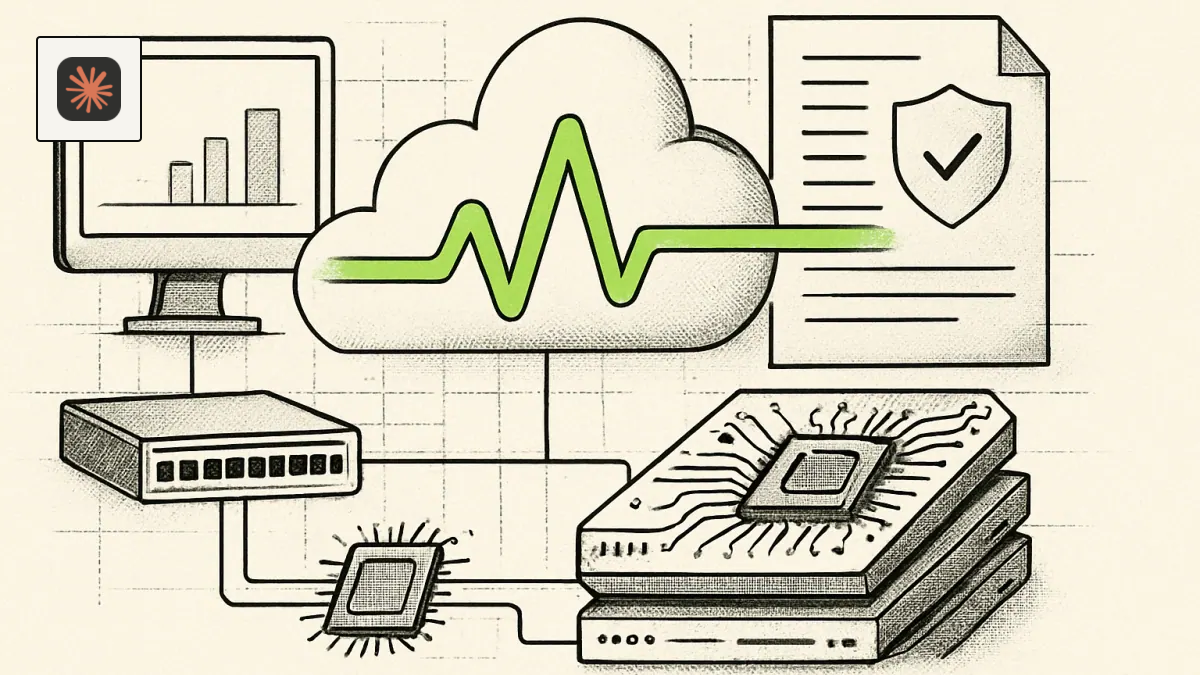
AI generated — machine-made illustration, not a photograph of the event.
Small teams can protect internal APIs with edge controls, reassign subscription credits to API organisations, and must now plan for agent-driven engineering and stricter model monitoring.
Cloudflare makes private origins generally available
Cloudflare’s Private Origins feature is now generally available: you can point a proxied DNS record at a private IP and Cloudflare will reach the origin over an existing Cloudflare One connection. WAF, caching, bot management, rate limiting and Workers apply to private origins the same way they do to public origins; access during the closed beta was via account teams and Cloudflare says it is opening access more broadly.
Why it matters: Teams running internal APIs, AI agent backends or operational tools can keep origins off the public Internet while restoring edge protections they previously lost when a public IP or cloudflared had to be exposed.
OpenAI matches Anthropic: subscription plans grant API credits
OpenAI has launched a benefit that mirrors Anthropic’s earlier announcement: customers on $100, $200 or $500 ChatGPT subscription plans receive an equivalent quantity of credits to apply to one API organisation. Simon Willison reports these credits are intended for API use and that the change lets subscribers cover token costs from their existing plan.
Why it matters: Teams with those paid ChatGPT plans can route some API consumption to an organisation without an extra monthly bill, reducing short-term probe and demo costs while the credits last.
OpenAI explains layered monitoring for frontier misalignment
OpenAI published an overview of how it detects frontier model misalignment and unauthorised agent behaviour using layered monitoring so responders can intervene before incidents escalate. The post describes monitoring layers and responder intervention as the core control strategy for early detection of problematic model or agent actions.
Why it matters: Operators running agentic workflows should expect similar layered telemetry and intervention patterns from vendors, and plan to integrate responder processes and incident signals into their operational playbooks.
Spawn shows agents can run production engineering — at scale and cost
Jacob Sansbury’s write-up on Spawn describes a massively multiplayer game world driven by a swarm of Fable-class agents; these agents modify live code, ship hourly, and triage errors and feature requests themselves. Sansbury reports token spend north of $3 million per month and notes agents file bugs and act on telemetry autonomously, including changing production code.
Why it matters: Teams considering agent-driven development will face significant token budgets and new review controls: autonomous agents that edit production increase operational and compliance risk unless you add guardrails and oversight.
SciGame benchmark separates prior knowledge from experiment design
SciGame (arXiv:2610.37919) turns scientific papers into paired Original and Counterfactual environments and runs Identification and open Discovery tasks under Prior-only, Fixed and Adaptive protocols. Experiments on five frontier models found that familiar priors can hurt when the governing relation changes, adaptive experimentation helps the strongest models but harms weaker ones with tight budgets, and plausible explanations can hide quantitative errors.
Why it matters: If you use LLM agents for research or product experiments, SciGame’s results suggest you should test under altered priors and be cautious that good explanations do not equal correct predictions.
TechCrunch Founder Summit: register before door pricing
TechCrunch’s Founder Summit is on 4 November at Boston’s SoWa Power Station; the event promises networking and practical sessions for founders and warns that prices increase at the door. The summary urges registration ahead of the event.
Why it matters: Founders and operators who value in-person dealflow or partner introductions should register in advance to avoid higher on-site rates and secure space for meetings.
What we don't know
- How long the OpenAI and Anthropic subscription-linked API credits remain valid and how they expire.
- Eligibility scope and rollout details for Cloudflare Private Origins beyond the closed beta phrase "eligible customers."
- Operational thresholds, telemetry types, and responder SLAs used in OpenAI’s layered misalignment monitoring.
- The governance, testing and audit practises Spawn uses before autonomous agents change production code.
- Which specific frontier models SciGame evaluated and whether those models match the ones teams deploy.
- Exact on-site pricing tiers and remaining ticket availability for the TechCrunch Founder Summit.
What to do next
- If you run internal APIs, evaluate Cloudflare Private Origins in a staging environment: test WAF rules, Workers and rate limits over Cloudflare One before migrating any production private origin.
- Check whether your organisation’s ChatGPT subscription tier qualifies for API credits and, if so, assign the credits to a test API organisation and measure how far they cover your expected token spend.
- For teams experimenting with agentic production workflows, budget for token spend, require human review gates for code changes, and run adversarial tests inspired by SciGame to reveal priors and explanation failures.
- Simon Willison — original reporting
- OpenAI News — original reporting
- Cloudflare Blog — original reporting
- TechCrunch AI — original reporting
- Simon Willison — original reporting
- arXiv cs.AI — original reporting
Links above go to the original publisher. Signalcraft states the consequence; it does not reproduce their text.
0 comments
No comments yet. If you have run any of this, that is the most useful thing you could add.